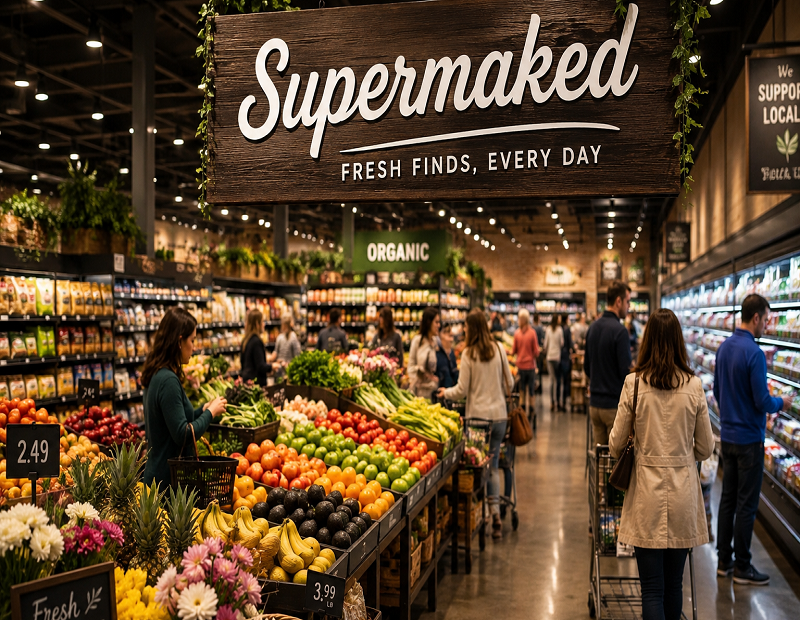
You walk into a store. The aisles are crowded. The prices on the shelf do not match the register. You wait 20 minutes in a checkout line. Or you order online and receive the wrong items. Every week, the same frustration repeats itself.
People started looking for something better. Something faster. Something smarter. That search gave birth to a new idea: Supermaked.
While “Supermaked” is not an official retail term, many bloggers and online users now use it informally to describe AI-powered grocery shopping experiences.
The word looks like a typo. And yes, it started as one. But in 2026, Supermaked means something real. Local stores in Europe began using it as a brand name. Tech blogs picked it up. Retailers started building around it. Today it describes the next generation of grocery shopping where AI, smart technology, and convenience come together in one place.
This guide covers everything you need to know. What Supermaked actually is. How it works. Who benefits from it. And why it is changing the way the world buys groceries. Simple language. No confusion. Just clear answers.
What Does “Supermaked” Actually Mean?
Supermaked is not a registered company. It does not have a headquarters. You cannot download a Supermaked app from the App Store right now. It started as a simple misspelling of the word “supermarket” most likely originating in European countries where English is a second language.
The word stuck. Small grocery stores in parts of Europe started using “Supermaked” as part of their store names. It felt local. It felt friendly. It was close enough to “supermarket” that customers understood what the store sold but different enough to stand out on a sign.
Bloggers, retail analysts, and tech writers started using Supermaked to describe a concept not just a store name. The concept is simple: a grocery store that uses modern technology to make shopping more efficient, smarter, and less frustrating. A store where AI helps you find what you need. Where checkout takes seconds instead of minutes. Where your online and in-store shopping work together as one smooth experience.
Think of Supermaked less like a brand and more like a direction. It is where grocery retail is heading in 2026. And that direction is worth understanding whether you are a shopper, a store owner, or just someone curious about where technology is taking everyday life.
What Makes a Store “Supermaked”?
Not every grocery store qualifies as a Supermaked-style store. There are specific features that separate a smart modern store from a traditional one. Here are the four biggest ones.
AI-Powered Recommendations
Traditional stores offer generic weekly flyers. Everyone gets the same deals whether they need those products or not. A Supermaked store works differently. It studies your shopping habits over time and gives you personalized suggestions.
Buy oat milk every week? The app reminds you before you forget. Always pick up pasta on Fridays? It alerts you to a discount on your favorite brand. Running low on something you bought three weeks ago? You get a notification before you even think about it.
This is not just convenient. It saves money. Shoppers who use AI-powered grocery apps consistently spend less because they buy what they need instead of wandering aisles and picking up things they do not need. Studies show that personalized grocery apps help shoppers save between 10 and 15 percent on their weekly bills compared to those who shop without any digital tools.
AI also helps with stock management. The store knows what is running low before it runs out. Popular items stay on shelves. Waste is reduced. Everyone wins. Companies like Walmart already use AI and predictive analytics to monitor inventory, improve product availability, and reduce unnecessary waste in retail operations.
Smart Carts and Cashierless Checkout
Companies like Amazon introduced cashierless shopping through Amazon Go stores, where sensors and AI automatically track items customers pick up and charge them without traditional checkout lines. You do not scan anything. You do not wait at a register. You pick up your items, walk out, and the payment is processed automatically through your linked account.
The results speak for themselves. In pilot stores that tested this technology, average transaction time dropped from 4.2 minutes to just 1.6 minutes. That is more than half the time saved — every single visit.
For a parent shopping with two kids, that difference is enormous. For an elderly person who struggles with self-checkout machines, it is a relief. For anyone who has ever watched one slow transaction hold up an entire line, it is long overdue.
Discover similar articles here: https://boostframemedia.com/category/lifestyle/
Electronic Shelf Labels
They get updated slowly. Errors happen. The shelf says one price, the register charges another. Customers complain. Staff spend entire days manually replacing tags across hundreds of shelves.
Supermaked stores use electronic shelf labels instead. These are small digital screens attached to shelves that update automatically when prices change. A price update that used to take a full workday now takes minutes across every shelf in the entire store at once.
The impact is significant. Electronic shelf labels can significantly reduce pricing errors compared to paper tags. Customers trust what they see on the shelf. Staff spend less time on manual tasks and more time helping shoppers. Right now, electronic shelf labels are already installed in more than 450,000 stores globally and that number is growing fast.
Hybrid Shopping Model
Some days you order heavy items for home delivery cooking oil, canned goods, cleaning products. Other days you stop at the store on the way home to grab fresh vegetables and bread. A Supermaked system recognizes this and connects both experiences under one account.
Your shopping list works online and in-store. Your loyalty points stack no matter how you shop. Your preferences follow you everywhere. Whether you are ordering from your phone at midnight or pushing a cart through the aisles on Saturday morning, the experience feels like one seamless journey not two separate systems that never talk to each other.
Why Supermaked Is the Future of Grocery Shopping
In 2025, the global smart retail market was valued at 52.1 billion US dollars. By 2031, experts project that number to reach 164.79 billion dollars. That is a growth rate of 21.15 percent every single year. This kind of investment does not happen unless something real is changing.
Consumer behavior is shifting fast. By 2030, an estimated 2.3 billion people worldwide will buy groceries online. That is nearly a third of the entire global population shopping for food digitally. Retailers who are not ready for this shift will fall behind and they know it.
Between 2023 and 2025 alone, 61 percent of major retailers expanded their AI analytics systems. Nearly half upgraded their smart shelf technology. More than a third deployed some form of autonomous or cashierless store format.
This is not a future trend. It is happening right now. The stores that adopt Supermaked features are already seeing results faster shopping, fewer errors, happier customers, and lower operating costs. The stores that do not adapt are already losing ground.
Supermaked vs Traditional Supermarket: Key Differences
| Feature | Supermaked | Traditional Supermarket |
| Checkout | Cashierless, automatic | Manual registers, long queues |
| Pricing | Digital labels, real-time updates | Paper tags, frequent errors |
| Personalization | AI-based, tailored to you | Generic weekly flyers |
| Inventory | Real-time, visible online | Limited transparency |
| Shopping Format | Hybrid — online and in-store | Mostly in-store only |
| Sustainability | Smart ordering, less food waste | Over-ordering is common |
| Customer Experience | Fast, smooth, connected | Slow, fragmented, frustrating |
Who Benefits Most from Supermaked?
Busy parents save the most time. Cutting 20 minutes off a grocery trip twice a week adds up to more than 30 hours saved every year. That is real time back with their families.
Elderly shoppers gain independence. AI assistants inside smart stores can answer questions, guide navigation, and help find products without needing to track down a staff member. The experience becomes less overwhelming and more comfortable.
People with disabilities benefit from cashierless checkout. Traditional checkout lanes involve physical barriers, social pressure, and time limits that can be stressful or impossible for some shoppers. Walking out without stopping at a register removes all of that friction.
Budget-conscious shoppers get smarter deals. Instead of generic coupons for products they never buy, they receive personalized discounts on items they actually use. Savings feel real because they are relevant.
Eco-conscious consumers support a system that wastes less. When stores use predictive AI to order exactly what they will sell, less food gets thrown away. Smarter logistics mean fewer unnecessary delivery trucks on the road. The environmental benefit is a natural side effect of running a smarter operation.
Smart Shopping Tips You Can Use Right Now
You do not need to wait for every store to adopt full AI supermarkets technology. You can start applying these ideas today.
Download your store’s loyalty app. Shoppers who use store apps consistently save 10 to 15 percent on their grocery bills. Deals are personalized. Coupons are digital. Points add up automatically.
Check stock online before you leave home. Most major chains now show real-time or near-real-time inventory online. If an item is out of stock, you know before making the trip.
Compare unit prices, not total prices. The bigger package is not always the better deal. Unit price cost per gram or ounce tells you the real value. Most shelf labels already show this number. Use it.
Shop during off-peak hours. Early mornings or late weekday evenings are quieter. Shelves are freshly stocked. Checkout smart or traditional is frictionless . Your stress level drops noticeably.
Try store-brand products with confidence. In many product categories, store-brand items are manufactured by the same companies that produce name-brand products. The quality is identical. The price is not.
Use click-and-collect when possible. Order online, pick up curbside. You skip the delivery fee. You skip the in-store time. You get the best of both worlds convenience without the extra cost.
Frequently Asked Questions
Is Supermaked a real company I can order from?
No. As of 2026, there is no single verified company called Supermaked operating as a grocery service. The term describes a concept the next generation of smart grocery retail. Think of it like the word “e-commerce.” It describes a category, not one specific store.
Where did the word Supermaked come from?
It began as a misspelling of “supermarket,” most commonly used in European countries where English is not the first language. Over time, local stores adopted it as a brand name and tech writers used it to describe smart grocery concepts.
What is cashierless checkout and how does it work?
When you enter a cashierless store, smart sensors and cameras track every item you pick up. By the time you are done shopping, your total is already calculated. You walk out and the payment charges automatically to your linked account. No scanning. No waiting. No line.
What are electronic shelf labels?
They are small digital screens that replace paper price tags on store shelves. Prices update across the entire store in minutes when changes are made. Pricing errors where the shelf shows one price and the register charges another drop by up to 94 percent with this system.
Is Supermaked-style shopping better for the environment?
Generally yes. When stores use AI to predict exactly how much of each product they will sell, they order the right amount. Less food goes to waste. Fewer unnecessary delivery runs are made. The environmental benefit is a direct result of running a smarter, data-driven operation.
Conclusion
Supermaked started as a spelling mistake. In 2026, it means something much bigger.
It represents the direction grocery retail is moving toward smarter stores, faster checkout, personalized experiences, and a seamless connection between online and in-store shopping. The technology is already here. The data backs it up. The demand from shoppers is growing every year.
You do not need to wait for the perfect cashierless stores to open near you. You can start using these ideas right now through your store’s app, by checking stock online, by shopping smarter with unit prices and off-peak timing.
Whether the term “Supermaked” becomes mainstream or not, the technology behind it is already reshaping how people shop for groceries.